Reality Symposium Sketchbook: Malta
Earlier this month I was in Malta for a week. Not for vacation, and not to visit the set of Robert Altman and Robin Williams brilliant weirdo 1980 children’s movie Popeye, though I did do that too. I went to Malta for a Symposium on Reality.
Last winter I got an email inviting me to the event by the good people at the podcast Wonderstruck. They wanted to hire me to come, to sit in, and to create a 24-page comic out of whatever happened there. The symposium finally happened in June and it was… kind of amazing. I am currently sifting through the experience, figuring out what it will mean exactly to make a book out of it. In the beginning I had assumed that the drawing and jotting I did while I was there would be a big part of the book, but as the weekend proceeded it became clear that the sketchbooks would barely scratch the surface of the extraordinary goings-on. And so I’ve decided, with Wonderstruck’s blessing, to share a sampling of the sketchbook spreads here as a kind of preview of the book, which will likely be out next year, though that, too, is a little up in the air. Spreads from a few of the talks are below with a bit of commentary following each.
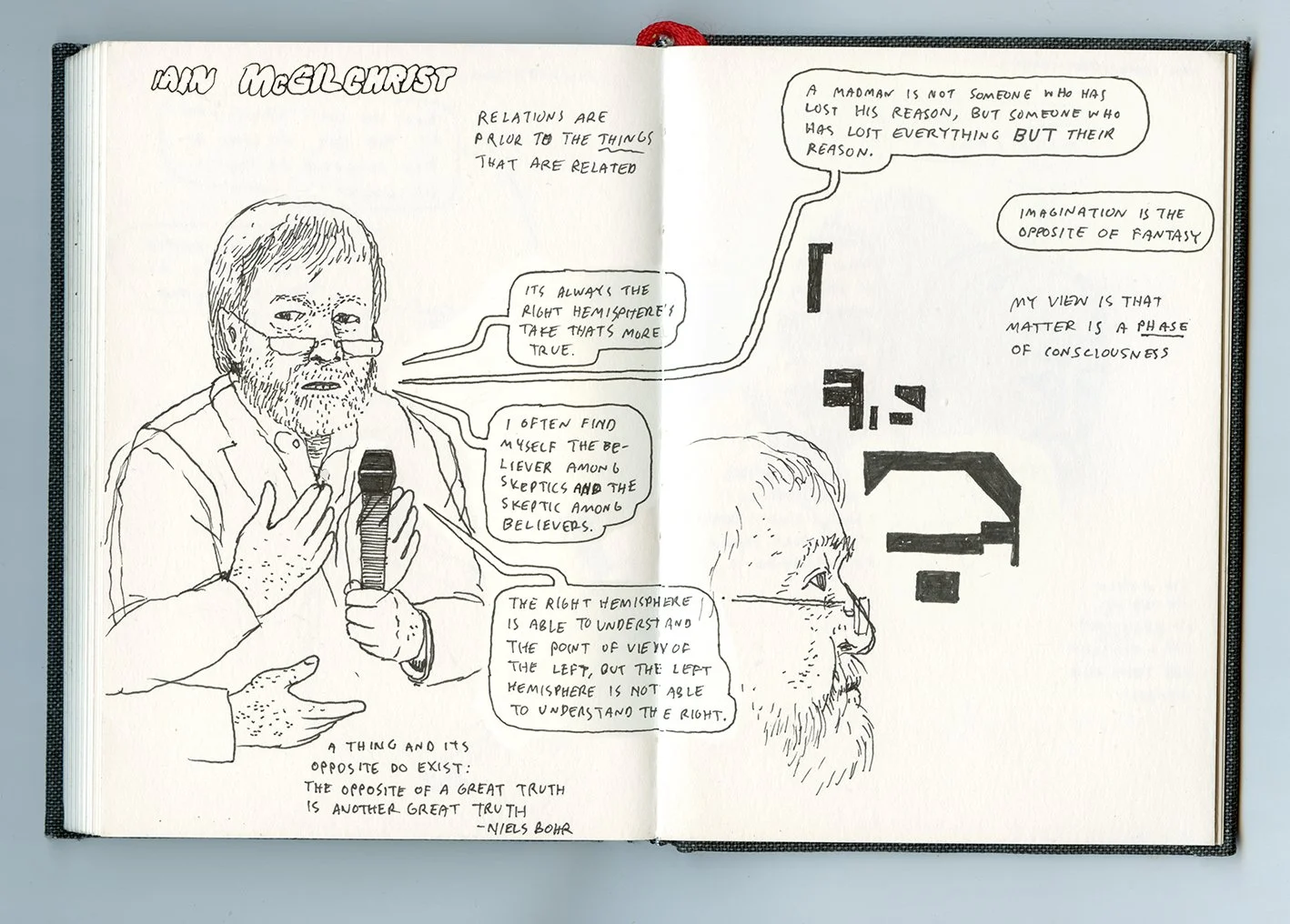
One of the few people at the gathering that I’d heard of was Iain McGilchrist, a neurologist from the UK. I’d listened to a good chunk of his book The Master and His Emissary a few years back and found it fascinating. It’s about the two halves of the brain and their interaction. I still think about it regularly with respect to being a cartoonist — text and image are processed by opposite halves, which makes comics feel kind of magical as a medium to me. He was one of the first people to talk the first day, on the subject of ‘The Fractured Mind’, interviewed by Nigel Warburton.
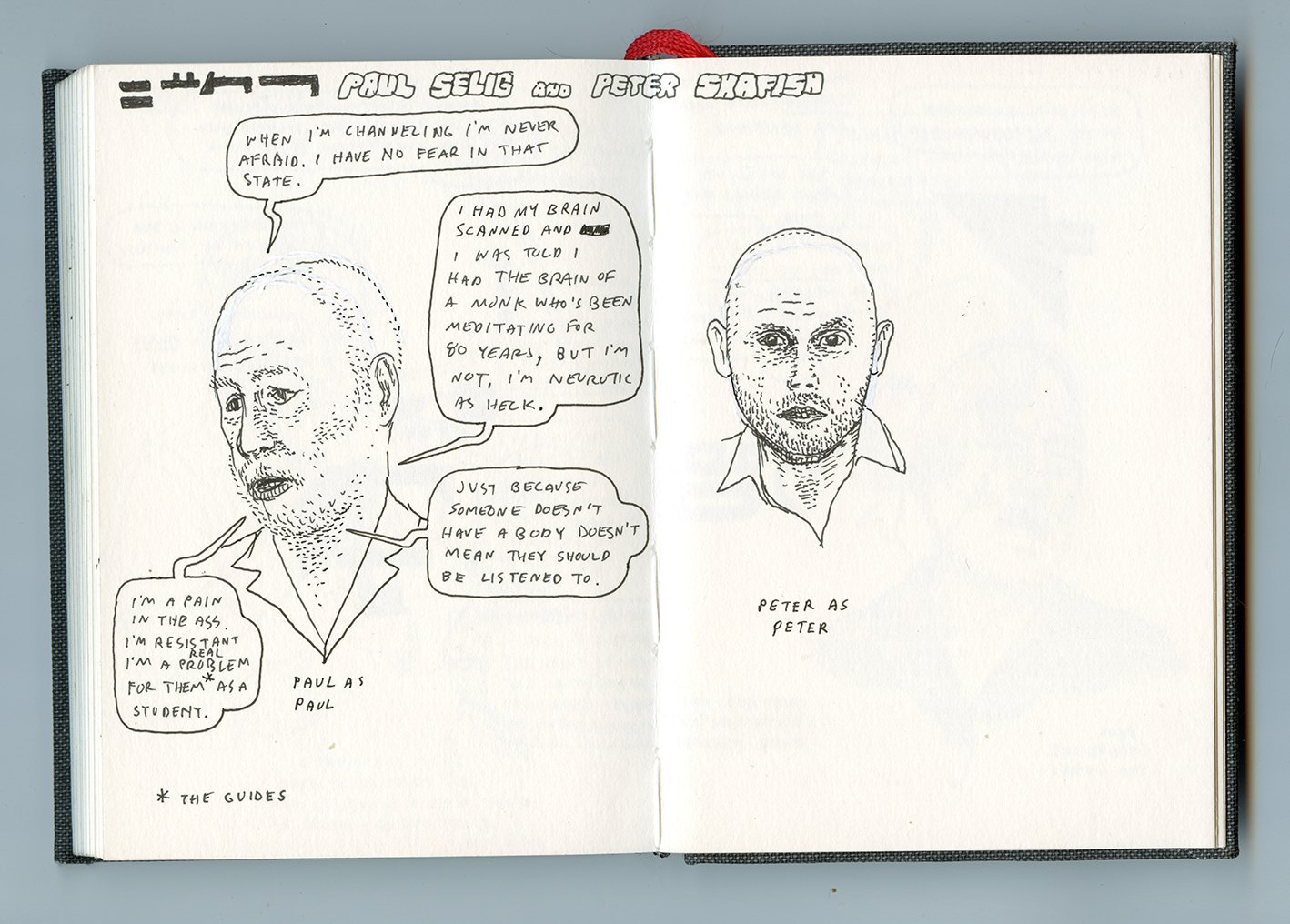
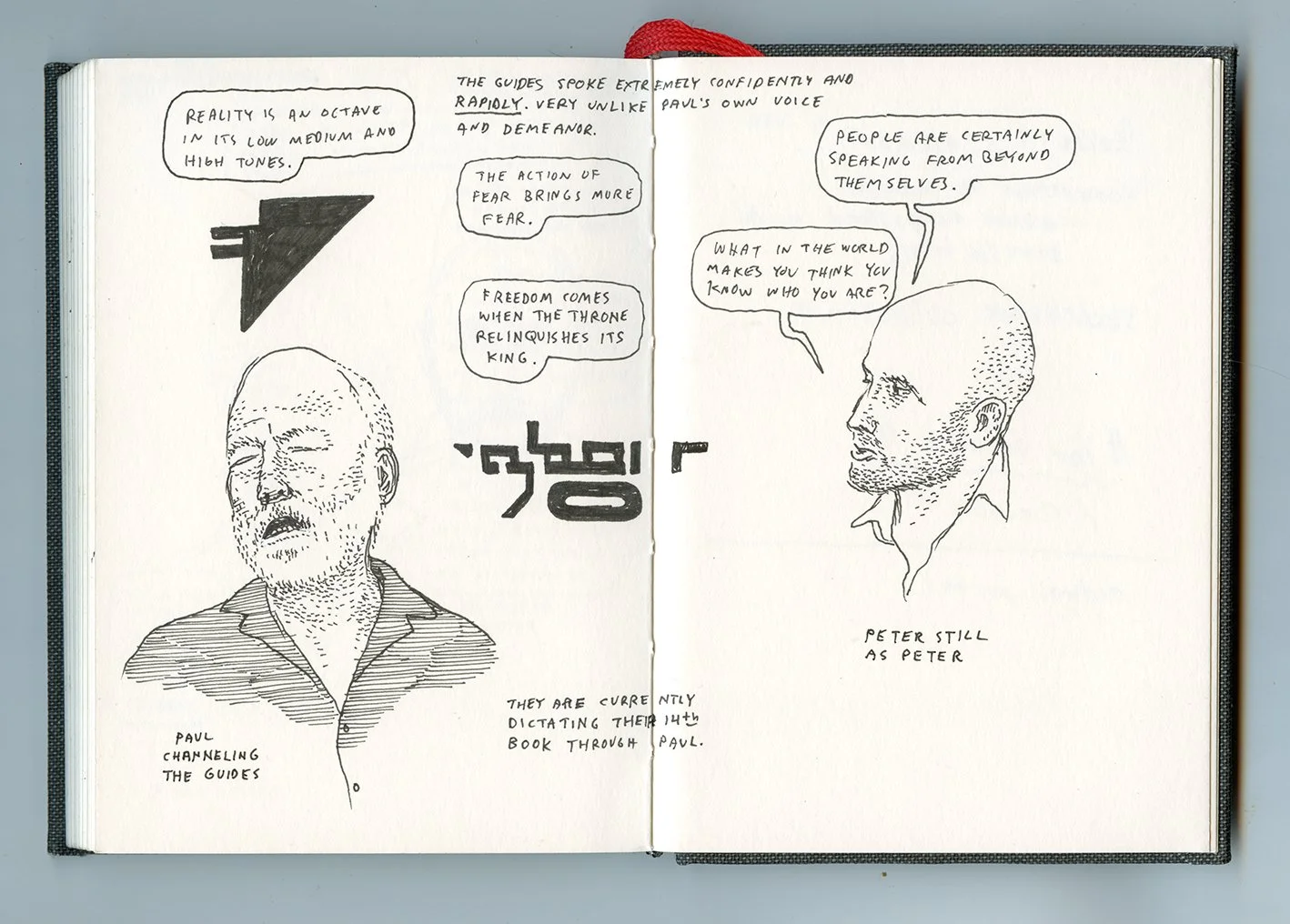
Also on the first day anthropologist and philosopher Peter Skafish interviewed Paul Selig about his experience as a channel and his disembodied/otherworldly ‘guides’. In case you’re not familiar with the terminology, a channel is different from a medium. Mediums connect to dead people, Paul channels other non-human intelligences. I specifically drew him first just as himself (above) and then again while in the midst of channelling (see below). Yes, this might be hard to believe or take seriously. But that’s what I saw and how it was explained. And for what it’s worth I found it completely, for lack of a better word, convincing. Whatever was happening it didn’t seem in the least like someone pretending or doing an act. I talked to Paul a few times over lunch or cocktails as well, and I liked him a lot. Very sweet, unassuming and down-to-earth guy. Peter Skafish was part of several talks over the weekend. His work is wide ranging, but among other things he consults with the US government on UAP (UFOs). But that wasn’t part of this talk.
Here’s Paul channelling his guides:
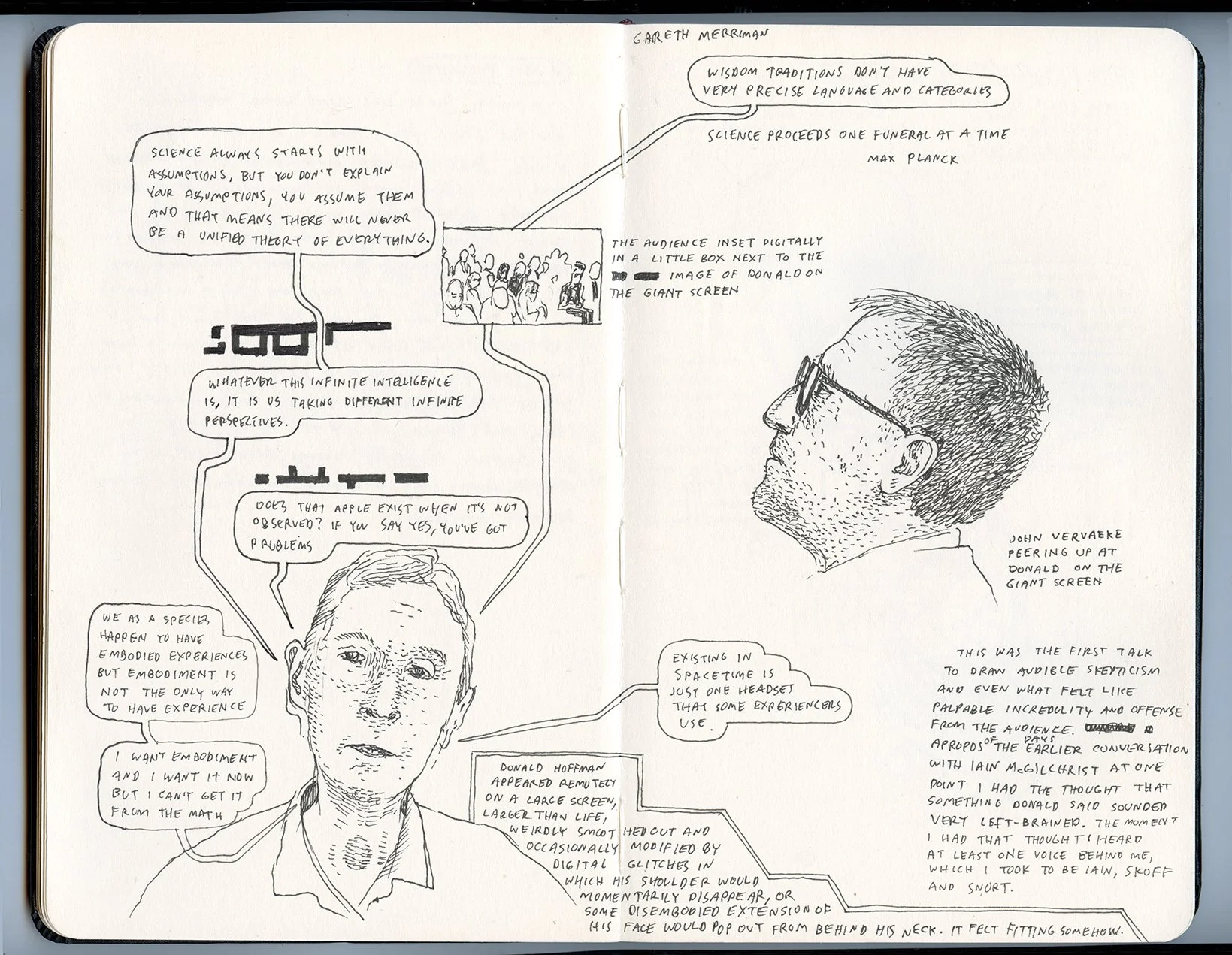
The most audibly controversial talk was a conversation between cognitive psychologists John Vervaeke and Donald Hoffman. Despite a history of disagreement the two of them seemed to be trying very hard to be friendly. Nevertheless both during the talk and afterward people had a lot of very strong opinions. As I understood it Hoffman is interested in demonstrating that the fundamental ground of the universe is not electrons or quarks or strings, but consciousness. He has a lot to say about the problem of the observer in quantum mechanics (think Schrödinger’s cat), and how physicists don’t really take it seriously as an issue. I find Hoffman’s ideas and his description of consciousness utterly fascinating… to the extent that I understand it, of course.
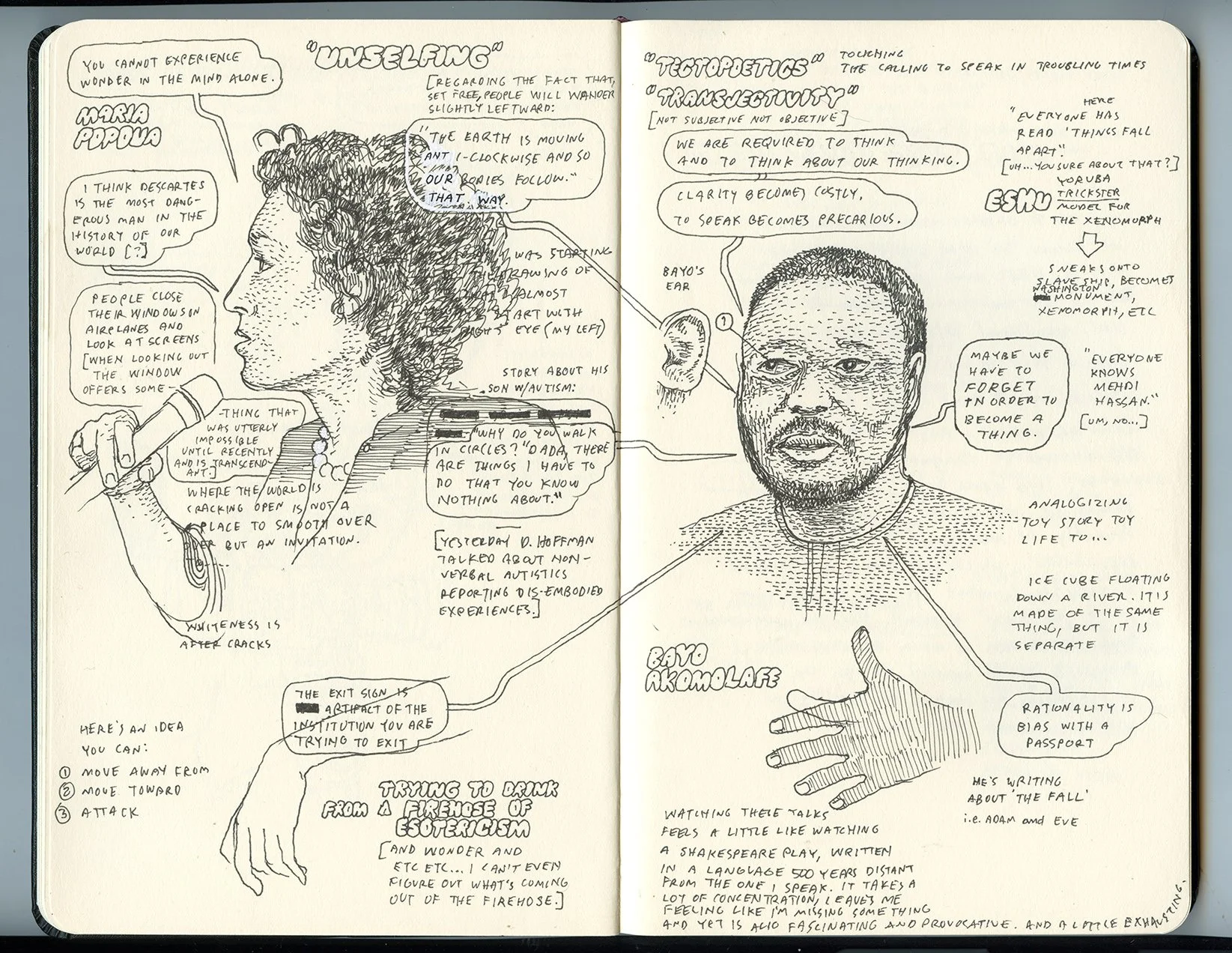
On the second day Báyò Akómoláfe talked on his own for a while, circling the subject of reality and our perceptions and understandings of it. Or lack thereof. And then Maria Popova joined him for a conversation. Among many (many) other things, he mentioned that HR Giger’s xenomorph in the movie Alien (the alien) was in part modeled on the Yoruba trickster god Eshu in Nigerian folklore. Coincidentally I had just taken a selfie with a life-sized xenomorph sculpture in New York about two weeks earlier. Happenstance or destiny? Destiny, obviously. Or the trickster is just having fun with me.
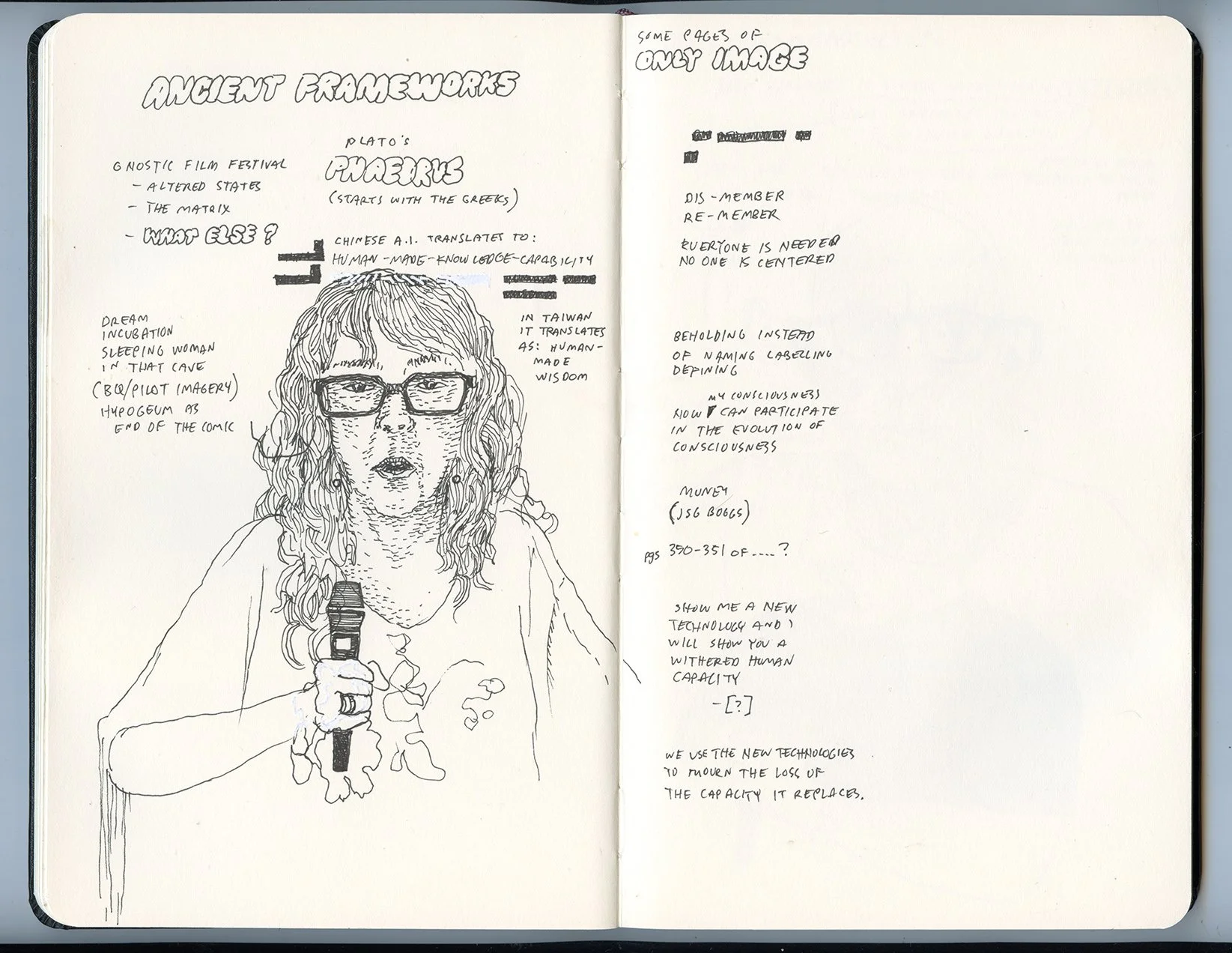
Later on the last day was a conversation between April DeConick and Srinija Srinivasan about ancient non-western ways of understanding the world and its deeper realities and how these might be worth re-evaluating and taking seriously. Like, perhaps they had understandings about the world that we have lost that might be literally true, or at least useful, in ways our modern frameworks can’t really get our mental arms around. DeConick studies ancient christian Gnostics, Srinivasan is in technology and is a co-founder of Jubilee University. Elaine Pagel’s book The Gnostic Gospels was hugely influential to me as a very young artist, so this one was fun for me. By the third day I had realized taking notes in the moment wasn’t going to be all that helpful for the book, so there are fewer actual quotes here. Also my brain was pretty wrung out by this point.
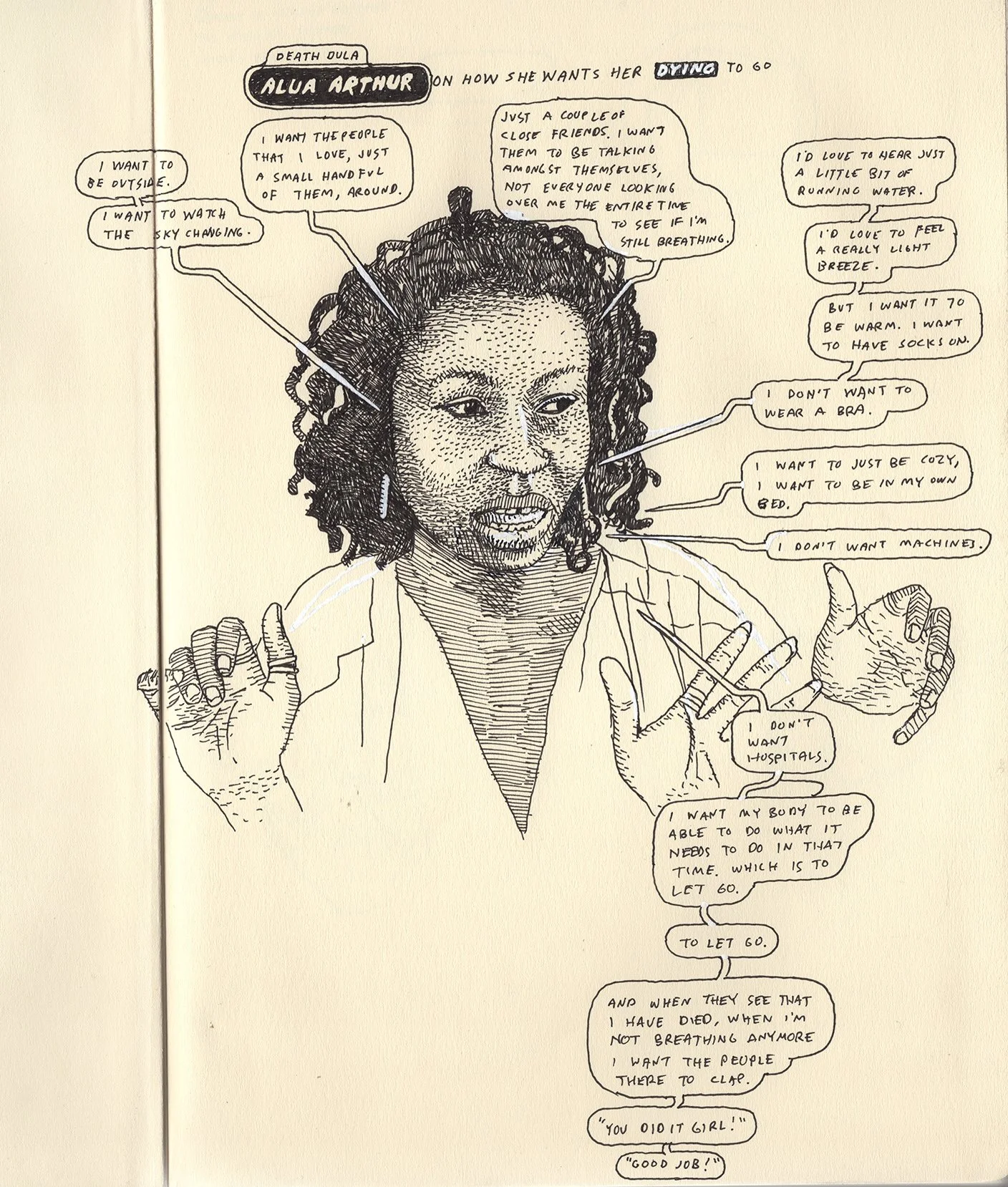
Lastly, a theme that came up at the symposium repeatedly, and which certainly colors my own understanding of the world is the subject of death and mortality. As it happened I missed the day-three panel with Alua Arthur, a death doula and writer about dying. I was in a cave underground. But before the symposium even started I was already trying to familiarize myself with the participants and beginning to play with ways to tell its story, and so I’d done this drawing of Alua from a podcast interview on Youtube talking about how she might like her own death to go.
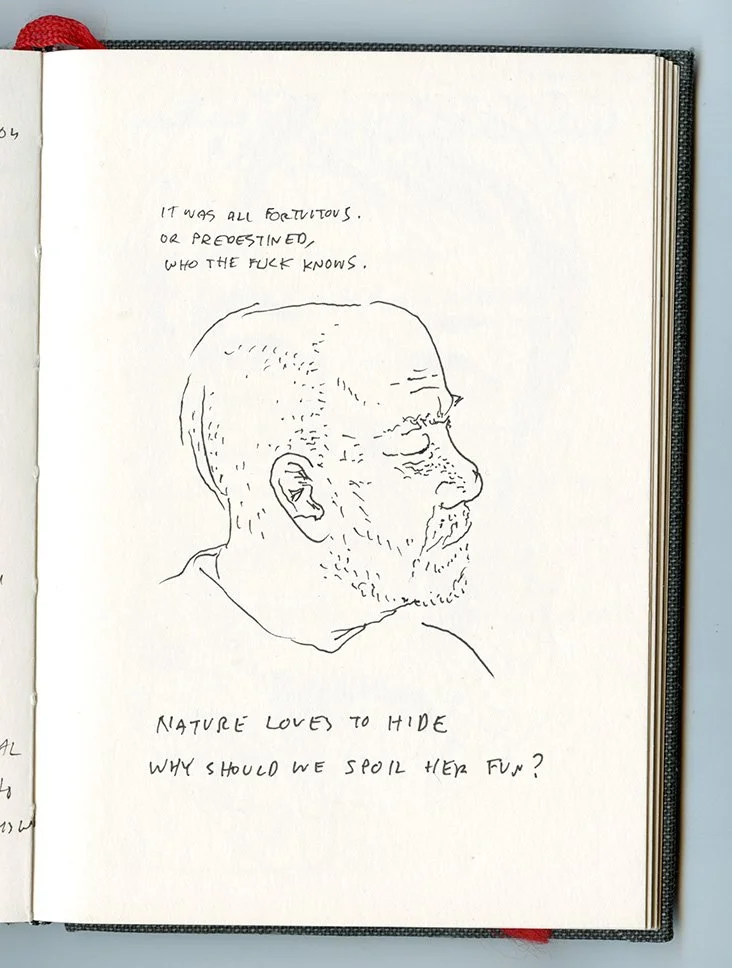
I’ll close with another drawing of Paul Selig, from the night before things got started. We were sitting with a few other people in the garden under the stars just beginning to settle into the strangeness of the weekend. The first quote is from Paul, talking about the unexpected trajectory of his life. I can very much relate. The second is, I believe, from Elizabeth’s opening remarks. It’s a question I expect to return to as I turn all of this into a coherent story of some sort.
There’s lots (and lots) more, but that is probably plenty for the moment. I’m not sure how I’m going to fit it all into 24 pages. But I’m very excited to sit down and try. It was, again, amazing.
Some of the other presenters included religion scholar and parapsychologist Jeffrey Kripal, Jungian analyst and dream excavator Toko-Pa Turner, paranormal research scientist Dean Radin, psychedelics researcher and advocate Alex Beiner, Neuroscientists Alex Gomez-Marin and Anil Seth, religion scholar and martial artist Simon Cox. Who else? Oh right, John Cleese was there. Yes, that John Cleese.
Some of these people have TED talks, pretty much all of them are easily findable on YouTube or some podcast or other (like Wonderstruck). Or you can just wait for the book.
For what it’s worth I’m planning to send a few more images with my Supporters. So if you want in on that, and a few other links and secret messages, feel free to sign up. It helps tremendously in making this thing go.
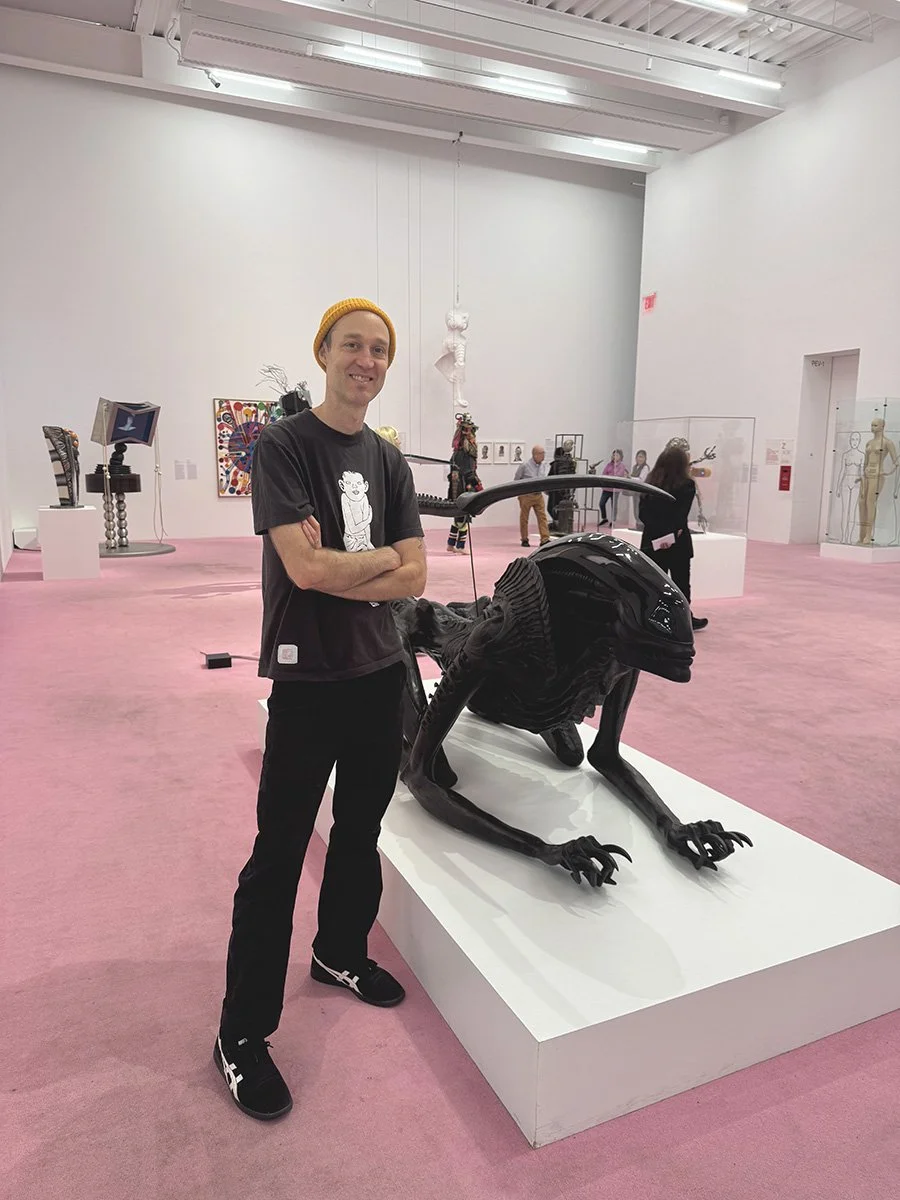
photo by Adam Henry. From the “New Humans” show at the New Museum in New York